
Why Our Badri Cow Ghee Costs More — And Why It’s Worth Every Rupee
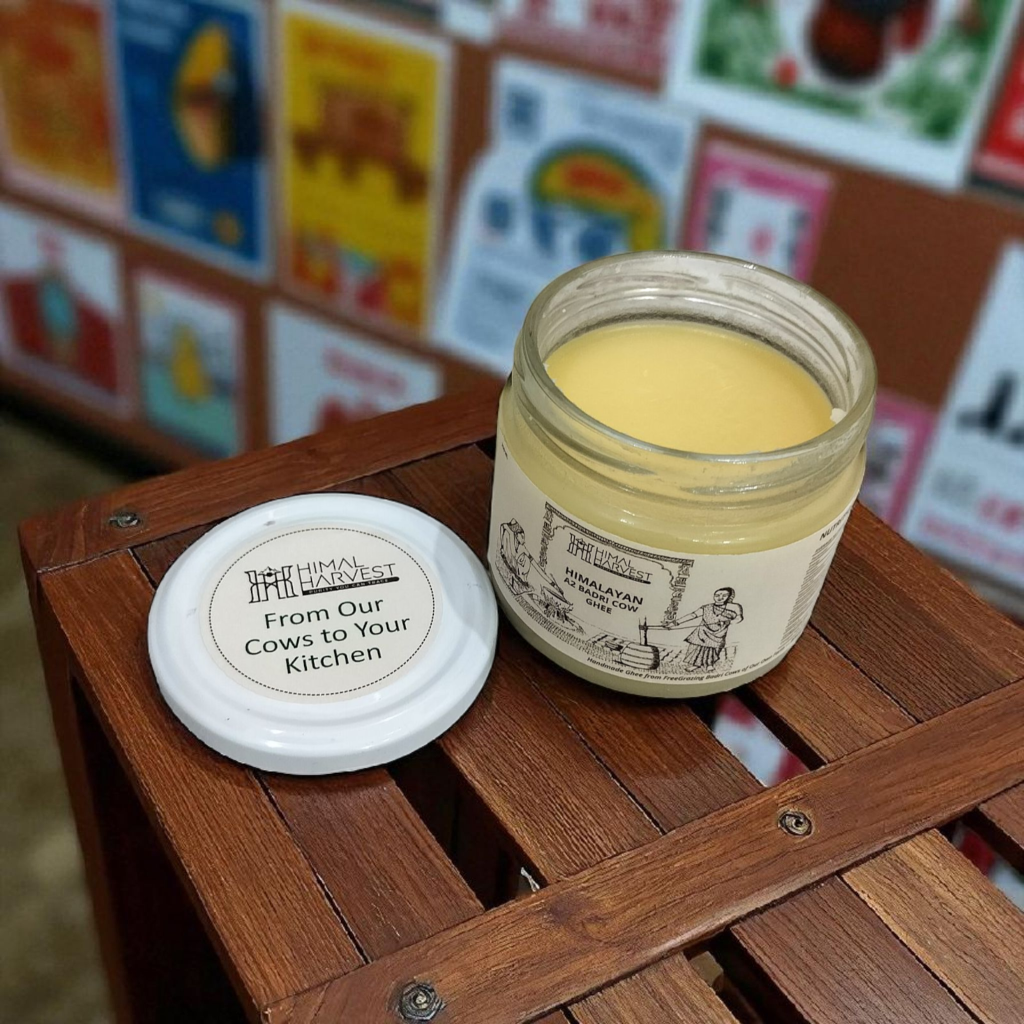
If you’ve ever wondered “Why is authentic Badri Cow Ghee so expensive?”, here’s the truth. Our ghee is not just a product — it’s the result of rare cows, ancient traditions, ethical care, and the challenges of Himalayan farming.
1. Rare Badri Cows Give Very Little Milk
- A pure Badri cow produces only 2–2.5 liters of milk per day.
- It takes 30–35 liters of this rich A2 milk to make just 1 liter of ghee.
- In villages, cross-breed cow milk sells at ₹60 per liter. By that measure, Badri cow milk should be valued at ₹80 per liter — making the milk cost alone ₹2,400–₹2,800 per liter of ghee.
- This is one reason authentic Himalayan Badri Cow Ghee can never be cheap.
2. Traditional Bilona Method — From Curd, Not Cream
- We make ghee using the ancient Bilona method:
- Set fresh milk into curd overnight.
- Churn the curd to extract butter.
- Slow-heat the butter to produce golden ghee.
- The by-product here is buttermilk, which has no commercial value for us — we feed it to our calves.
- Cream-based ghee makers sell their leftover milk as low-fat or skimmed milk, which helps them recover costs — we don’t.
3. Ethical & Lifelong Cow Care
- Our cows live with their calves, and calves always get their share of milk.
- We take care of male calves and old, non-milking cows — no one is sold or abandoned.
- Every animal is a lifelong member of our herd, and their food, shelter, and medical care are part of our costs.
4. The Dry Period Doubles Costs
- A cow produces milk for only 6–7 months after calving.
- The next 7–8 months are a dry period when she prepares for the next birth.
- To ensure year-round ghee production, we keep two sets of cows — one milking, one resting — which doubles the cost of maintenance.
5. 100% Natural — No Artificial Milk Boosters
- We never use hormone injections, chemical feed, or any artificial method to increase milk yield.
- All our milk is naturally produced, as cows graze on Himalayan herbs and shrubs.
- This keeps our yield pure, nutrient-rich, and high in Omega-3, CLA, and antioxidants.
6. Farming in the Himalayan Hills Is Harder
- Our farm is located 500 meters downhill from the nearest road, connected only by a steep path.
- In the monsoon, the kutcha road closes, and we must trek 5–6 km to the nearest paved road.
- Labour is scarce in hill regions, and wages are higher to match the physical effort required.
7. Saving a Breed on the Brink of Extinction
- The Badri cow is endangered — most farmers avoid them due to low milk output.
- We travel to remote Himalayan villages (15–20 km from the road) to find pure Badri cows.
- Transporting them costs 2–3 times their purchase price due to challenging terrain, hired labour, and special arrangements.
💛 Every jar of our ghee supports the survival of the Badri cow, preserves an ancient Himalayan tradition, and sustains ethical farming in one of the toughest terrains in India.
If you value purity, tradition, and animal welfare, our ghee is the real thing.
Order Authentic A2 Badri Cow Ghee from HimalHarvest →